
If you’re missing one or more teeth, you’ve probably heard of dental implants. They look natural, feel secure, are the gold standard for replacement, and can last a lifetime with proper care.
But most patients don’t realize there’s more than one type of dental implant. Several approaches exist, and the right one depends on how many teeth you’re missing, where they’re missing, and the health of your jawbone and gums.
Dr. Mark Hagigi at Montgomery Dental Associates & Implantology Center has been placing implants for patients across Rockville and Montgomery County for over 20 years. He’ll evaluate your situation and recommend the approach that fits your needs. Here’s a look at the types of dental implants we offer.
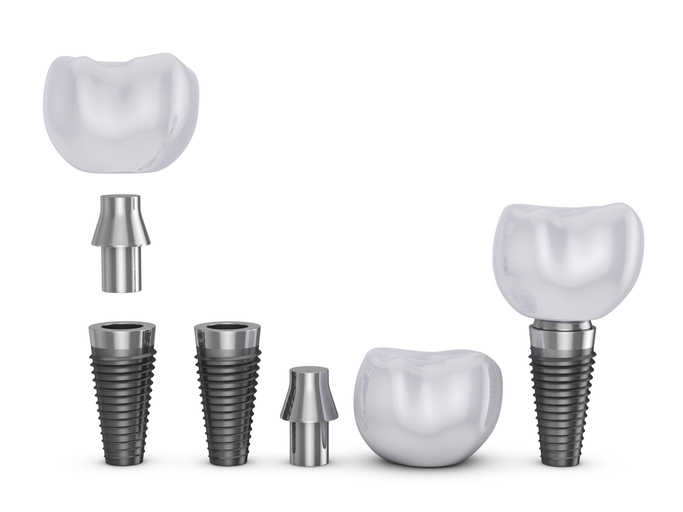
Single Tooth Replacement
If you’re missing one tooth, you have a few options.
- A Traditional Dental Bridge: It involves preparing the teeth on either side of the gap and anchoring a false tooth between them. Bridges work, but they require grinding down healthy teeth to make room for the crowns. That’s a permanent change to teeth that weren’t damaged in the first place.
- A Single Dental Implant: A better option for most patients. Instead of relying on neighboring teeth, the implant replaces the tooth root itself. Dr. Hagigi places a small titanium post into your jawbone. Over the next three to six months, the post fuses with the bone through a process called osseointegration. Once it’s stable, he attaches an abutment and a custom-made crown that matches your natural teeth.
The result is a tooth that looks, feels, and functions like it was always there. Because the implant replaces the root, it helps preserve the jawbone and doesn’t affect the healthy teeth next to it.
Multiple Missing Teeth Solutions
If you’re missing several teeth, the approach depends on how they’re distributed. Options include:
- Implant-Supported Bridge: When you’re missing a row of consecutive teeth, an implant-supported bridge can replace them without affecting the healthy teeth on either side. Instead of anchoring to natural teeth, the bridge attaches to implants placed in the jawbone. That means no grinding down of healthy teeth, and the restoration is more stable than a traditional bridge.
- Individual Implant Crowns: If your missing teeth are spread out, Dr. Hagigi may recommend individual implant crowns for each gap. This approach gives you the most natural result and preserves the health of the teeth between the gaps.
- Combination Approach: Sometimes the best solution is a mix of implant-supported bridges and individual crowns. This depends on where the missing teeth are and what the surrounding teeth look like.
In every case, you don’t need to replace every missing tooth with its own implant. A few strategically placed implants can support a larger restoration.
Full Arch Replacement
If you’re missing all the teeth in one arch, you have a few options, including:
- Traditional Dentures: They’re removable, affordable, and don’t require surgery. But they also have drawbacks. They can slip, they don’t preserve jawbone, and they require daily maintenance.
- Implant-supported Dentures: A more stable, durable option. Instead of resting on your gums, they snap onto implants placed in your jawbone. That means no slipping, no adhesives, and much more chewing power.
- The All-on-4 Technique: The most popular full-arch solution. It uses just four strategically placed implants to support an entire arch of teeth. The back implants are angled to make the most of your available bone, which often eliminates the need for bone grafting. Many patients can have their new teeth placed the same day.
Dr. Hagigi has helped hundreds of patients in Rockville and the surrounding communities restore their smiles with implant-supported dentures. If you’ve been told you’re not a candidate for implants, or if your current dentures are loose and uncomfortable, come in for a consultation.
What About Bone Grafting?
Sometimes the jawbone isn’t dense enough to support an implant. That can happen after a tooth has been missing for a while, since the bone shrinks without the stimulation of a tooth root.
If you need more bone, Dr. Hagigi can perform a bone graft to build up the area before placing the implant. This adds time to the treatment plan, but it makes implants possible for patients who might otherwise be told no. Dr. Hagigi uses advanced 3D cone beam imaging to evaluate your bone structure and plan the graft precisely.
How Do I Know Which Type Is Right for Me?
The type of implant you need depends on several factors:
- How many teeth you’re missing
- Where those teeth are located
- The health of your gums and jawbone
- Your overall health and any medications you take
- Your goals, timeline, and budget
There’s no one-size-fits-all answer. During your consultation, Dr. Hagigi will examine your mouth, take 3D imaging, and discuss your options. Then he’ll create a personalized treatment plan that fits your situation.